Texas Native Plants in Buchanan Dam, TX
Discover beautiful native Texas plants for gardens, pollinators, and water-wise landscapes at Sam's Nursery & Landscaping. Explore plant choices suited to Texas Hill Country growing conditions.
Native Plants for Beautiful Texas Hill Country Gardens
Explore Texas native plants that bring natural beauty, seasonal color, and ecological value to local landscapes. Discover options for sunny gardens, pollinators, and water-wise planting.
 Well Adapted
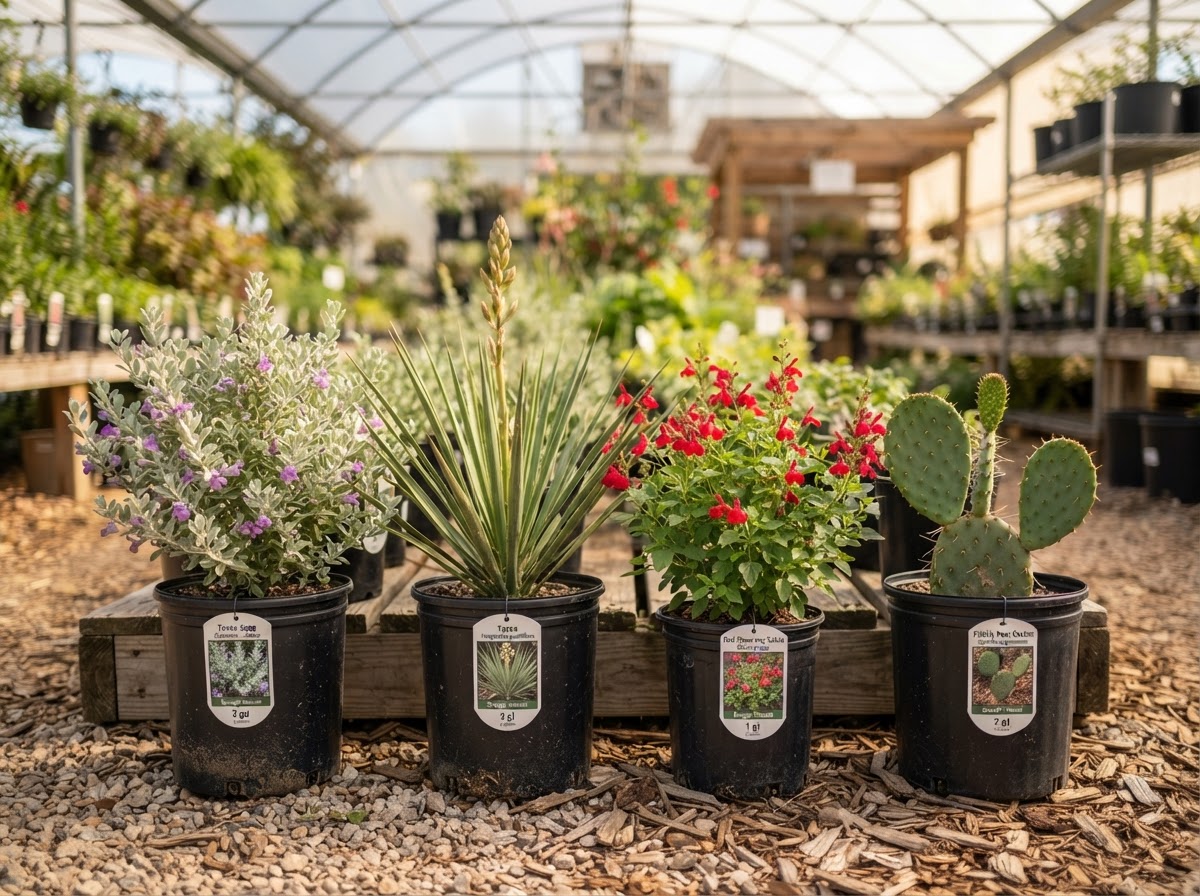
Texas Sage
Leucophyllum frutescens
Texas Sage is the quintessential Hill Country native, with silvery foliage that erupts in purple bell-shaped blooms after summer rains. Extremely drought-tolerant and deer-resistant, it thrives in full sun and lean, well-drained limestone soils without fuss. A natural choice for water-wise hedges, xeriscape beds, and pollinator-friendly landscapes across the Texas Hill Country.
 Well Adapted
Texas Mountain Laurel
Dermatophyllum secundiflorum
A slow-growing Texas native, Texas Mountain Laurel rewards patience with showy, grape-scented purple flower clusters each spring. Its glossy evergreen foliage makes a refined large shrub or small tree. Drought-tolerant once established and deer-resistant, it prefers well-drained Hill Country soils and resents being overwatered. Give it room and avoid transplanting once sited.
 Well Adapted
Texas Redbud
Cercis canadensis var. texensis
The Texas Redbud announces spring with bare branches covered in vivid magenta-pink blooms before the heart-shaped leaves emerge. This native understory tree handles Hill Country heat and limestone soils well and thrives at the edge of shade. Its manageable size makes it a perfect ornamental for residential yards, and early pollinators rely on its nectar.
 Well Adapted
Blackfoot Daisy
Melampodium leucanthum
A tough, low-growing Texas native, Blackfoot Daisy covers itself in white, yellow-centered daisies from spring through fall. It thrives in the hottest, driest, leanest Hill Country soils and resents rich soil and overwatering. Deer-resistant and long-blooming, it is ideal for rock gardens, xeriscape borders, and sunny gaps between larger natives.
 Well Adapted
Autumn Sage
Salvia greggii
Autumn Sage is a Hill Country favorite for hummingbirds, blooming in waves of red, pink, and magenta tubular flowers from spring through fall. Its small aromatic leaves are deer-resistant, and it thrives in full sun to part shade with good drainage. A light shearing between bloom cycles keeps it compact and flowering freely — a staple for pollinator gardens.
 Well Adapted
Flame Acanthus
Anisacanthus quadrifidus var. wrightii
Flame Acanthus lights up late summer and fall with slender, arching stems of tubular orange-red flowers that hummingbirds love. This Texas native is extremely heat- and drought-tolerant once established and thrives in lean, well-drained soils. Deer usually leave it alone. It dies back in winter and returns from the roots each spring — cut it back in late winter.
 Well Adapted
Turk's Cap
Malvaviscus arboreus var. drummondii
Turk's Cap produces unusual, tightly curled red flowers that never fully open — hummingbirds navigate them easily. A shade-tolerant Texas native, it thrives under trees and at woodland edges where many sun-loving natives struggle. Deer-resistant and adaptable to varied soils, it brings reliable late-season color and pollinator activity to partly shaded Hill Country gardens.
 Well Adapted
Texas Lantana
Lantana urticoides
Texas Lantana is a native, heat-loving shrub that covers itself in clusters of orange, yellow, and red flowers from spring until frost. Extremely drought-tolerant and deer-resistant, it thrives in the toughest Hill Country conditions and attracts butterflies by the dozens. Its berries feed birds in fall. Give it full sun and room to spread — it is a vigorous, long-blooming workhorse.
 Well Adapted
Lindheimer's Muhly
Muhlenbergia lindheimeri
Lindheimer's Muhly is a Texas-native ornamental grass with elegant arching silvery-blue foliage and airy golden seed heads that glow in autumn light. Drought-tolerant and deer-resistant, it adds fine texture and movement to Hill Country landscapes and pairs beautifully with flowering natives. Cut it back in late winter before new growth emerges for a fresh, tidy form.
 Well Adapted
Little Bluestem
Schizachyrium scoparium
Little Bluestem is a native prairie grass that shifts beautifully through the seasons — blue-green in summer, coppery-red in fall, and silvery with fluffy seed heads in winter. Exceptionally drought-tolerant and adapted to poor, rocky Hill Country soils, it provides erosion control, winter interest, and habitat for skipper butterflies and songbirds.
 Well Adapted
Mealy Blue Sage
Salvia farinacea
Mealy Blue Sage sends up tall, showy spikes of deep blue flowers with silvery calyces that keep blooming through the heat of summer. This Texas native is more tolerant of humidity and heavier soils than many salvias, yet still prefers sun and good drainage. A reliable perennial for pollinator beds and Hill Country cottage gardens, it pairs well with Autumn Sage and Blackfoot Daisy.
 Adapted
Purple Coneflower
Echinacea purpurea
Purple Coneflower is a hardy native perennial with large, rosy-pink daisy flowers around a bristly orange cone. It blooms through the hottest part of summer and draws butterflies and bees, then goldfinches visit the seed heads in fall. Tolerant of Hill Country heat and drought once established, it prefers well-drained soil and full sun. A long-lived, low-maintenance pollinator favorite.
Plant selections vary seasonally. Contact Sam's Nursery & Landscaping in Buchanan Dam for current varieties, sizes, and availability.
Naturally Beautiful. Perfectly Suited to Texas.
Texas native plants offer distinctive beauty, wildlife value, and opportunities for water-wise gardening. Choosing the right species for your specific growing conditions is essential for a resilient, low-maintenance landscape in the Hill Country.
Sunlight & Growing Conditions
Full sun, partial shade, intense afternoon heat, and subtle microclimates across the Hill Country all shape which native plants thrive where. Matching a plant to its preferred exposure is the first step to a resilient native garden.
Soil & Drainage
Thin, rocky, limestone-influenced soils drain quickly and lean alkaline. Many Texas natives evolved in exactly these conditions and resent rich, heavily amended beds — good drainage matters more than fertilizer.
Pollinator-Friendly Gardening
Native flowers support bees, butterflies, hummingbirds, and other wildlife that evolved alongside them. A sequence of bloom across the seasons keeps a pollinator habitat active from early spring through late fall.
Water-Wise Plant Selection
Once established, many natives thrive on natural rainfall alone. Grouping plants by water need, mulching, and deep infrequent watering build drought resilience without overwatering sensitive species.
Growing Native Plants in the Texas Hill Country
From hot summers and rocky soils to occasional winter freezes, Central Texas presents unique growing conditions. Thoughtful plant selection and establishment practices can help create resilient native gardens around Buchanan Dam, Burnet County, and across the Hill Country.
When to Plant Native Plants
Fall and cooler months are often the easiest time to establish Texas natives. Mild temperatures and steadier rainfall let roots settle before summer heat arrives. Many hardy natives also plant successfully in early spring or even summer when given consistent watering — the ideal window depends on the species and the weather in a given season.
Fall planting gives most natives a long, gentle runway. While top growth slows in cooler weather, roots keep extending into warm soil, so the plant is better anchored and better hydrated before the first hot days of spring. Early spring is a second good window, though new plantings then face summer heat sooner and need closer watering.
Drought-tolerant stalwarts like Texas Sage and Blackfoot Daisy forgive a wider planting window, while species that resent disturbance — such as Texas Mountain Laurel — establish best with cooler temperatures and minimal root disruption. Our nursery team can help you time a planting to the species you choose and the conditions at your property.
Preparing Rocky Texas Soil
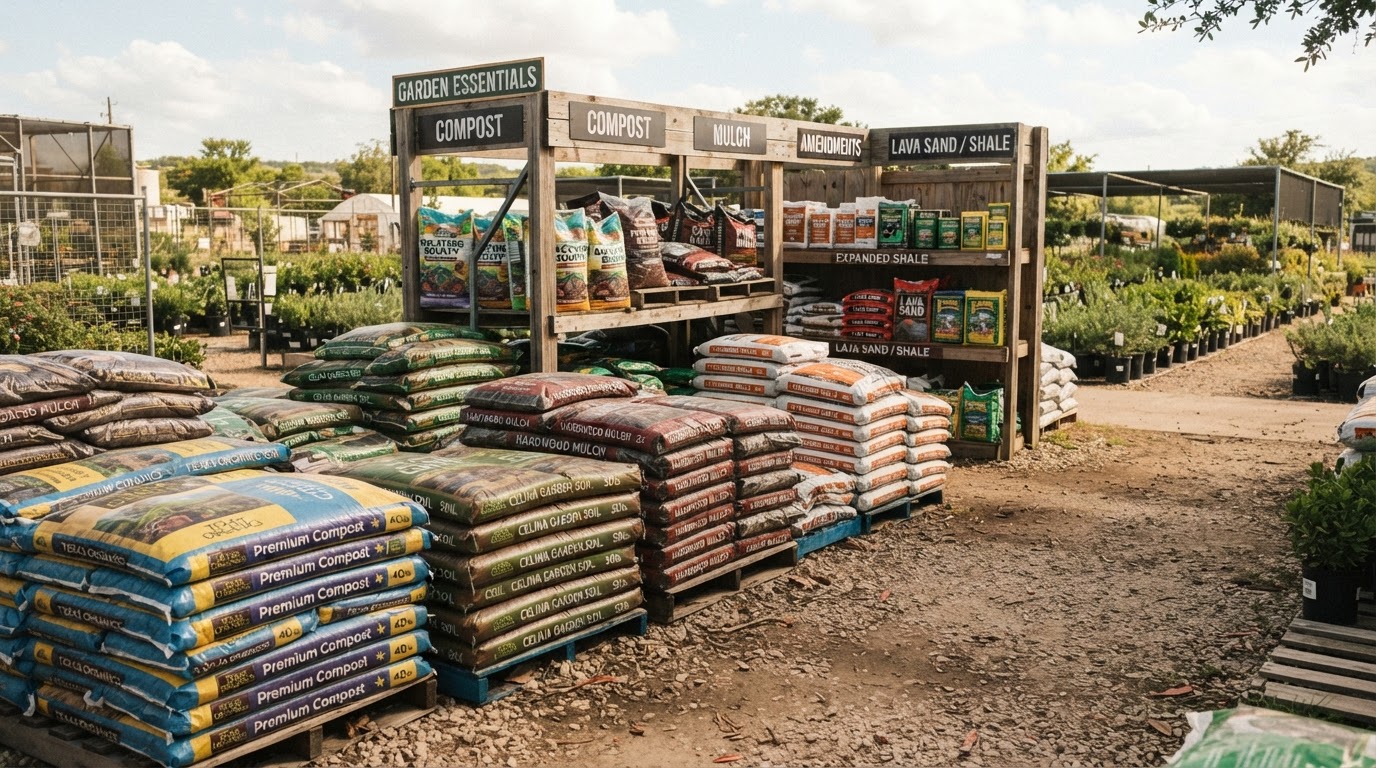
Much of the Hill Country sits on thin, rocky, limestone-influenced soil that drains quickly and leans alkaline. Good planting starts with digging a wide, shallow hole — never deeper than the root ball — loosening the surrounding soil, and setting the plant at the same depth it grew in the container. Heavy soil amendments are often unnecessary for natives adapted to lean conditions.
The most common planting mistake is planting too deep. Set the root ball slightly above grade in slow-draining or rocky clay so water doesn't pool at the crown, and slope soil away from the base. Loosening a wide ring of native soil around the hole encourages roots to spread outward rather than circling.
Drainage matters as much as soil type. If water stands after rain, choose natives that tolerate wet feet — or raise the planting area into a gentle berm. A two- to three-inch mulch layer, pulled away from the crown, moderates soil temperature, holds moisture, and feeds the soil as it breaks down. Avoid over-amending; many natives prefer lean native soil.
Watering Native Plants
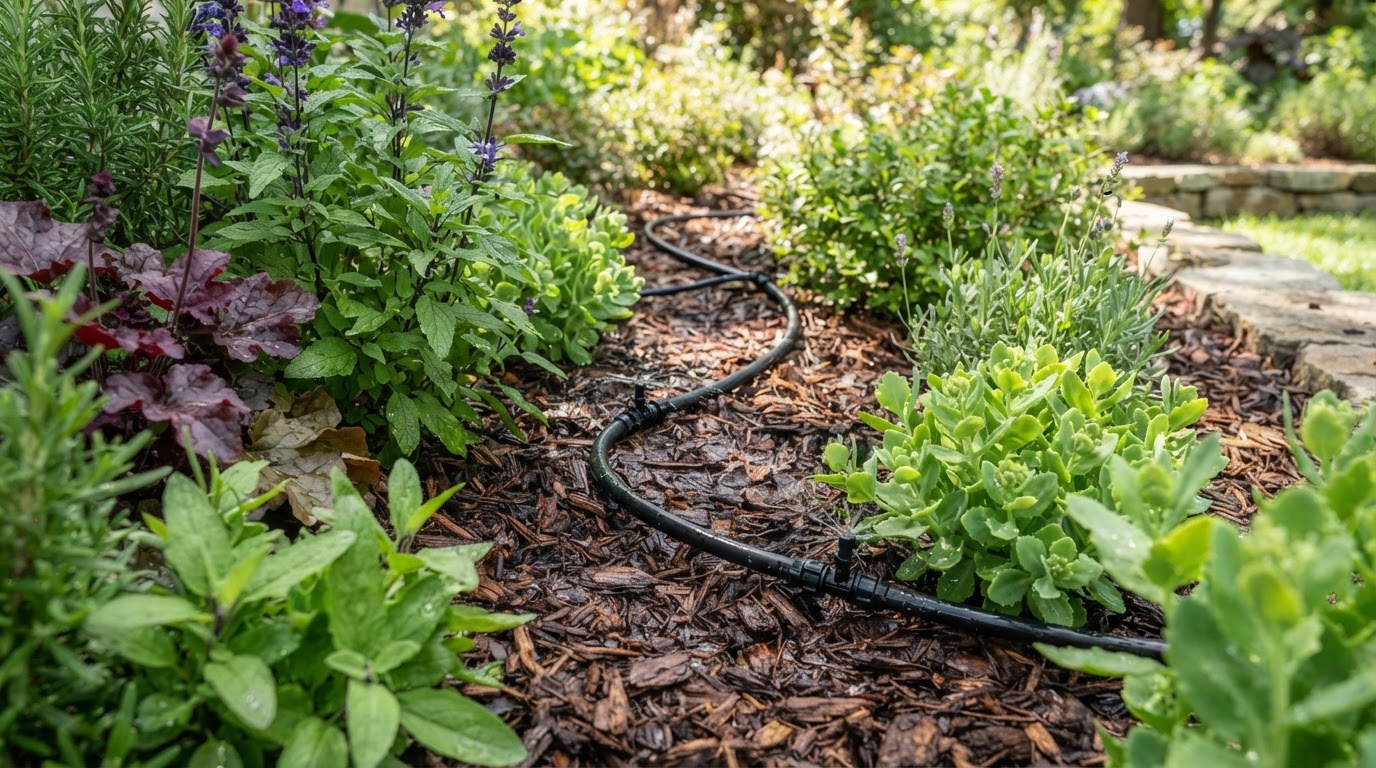
New native plants need deep, regular watering while their roots grow into the surrounding soil. Soak the root zone slowly rather than giving light sprinkles, and check soil moisture a few inches down before watering again. Once established over the first year or two, many natives thrive on natural rainfall with only occasional deep watering during prolonged heat.
Deep, infrequent watering encourages roots to grow downward and outward, while shallow sprinkling keeps roots near the surface and makes plants more drought-sensitive. Water at the drip line — the edge of the canopy — where the feeder roots are most active, and let the area dry slightly between sessions.
Check moisture by hand. If the soil is still damp a few inches down, wait; if it's dry, water deeply. Even drought-tolerant natives need consistent moisture their first season. Reduce frequency gradually through the second year as the plant becomes established. Grouping plants by water need keeps thirsty and dry-loving natives happy in the same landscape.
Creating Pollinator Habitats
A pollinator-friendly native garden offers a sequence of bloom from early spring through late fall, includes host plants for butterfly larvae, and avoids broad-spectrum pesticides that harm bees. Layering tall shrubs, mid-height perennials, and low groundcovers gives pollinators shelter, nectar, and nesting sites through every season.
Diversity of bloom matters more than any single plant. Early-season flowers like Texas Redbud feed bees emerging in spring, mid-summer workhorses like Mealy Blue Sage and Autumn Sage carry the heat, and late bloomers like Flame Acanthus and Lindheimer's Muhly extend the season into fall.
Include host plants as well as nectar. Several native butterflies lay eggs on specific plants — Little Bluestem supports skipper larvae, and Turk's Cap feeds butterfly caterpillars. A pesticide-free buffer, even a small one, helps pollinators thrive in an otherwise managed landscape.
Discover the Beauty of Native Texas Plants
From colorful wildflowers to distinctive shrubs and ornamental grasses, Sam's Nursery & Landscaping helps customers explore native plants for beautiful Texas Hill Country gardens — with knowledgeable guidance from a local team that understands Central Texas growing conditions.
Local Plant Selection Guidance
Our team helps you compare native species by sunlight, soil, mature size, and garden goals — so each plant fits your space and the look you're after.
Texas Hill Country Knowledge
Practical guidance for Central Texas heat, limestone-influenced soils, drainage, and seasonal conditions — the factors that shape how native plants perform here.
Pollinator-Friendly Gardens
Explore flowering native plants that can support butterflies, bees, hummingbirds, and other wildlife that evolved alongside Texas flora.
Complete Garden Center Solutions
Pair your natives with complementary trees, shrubs, soil, mulch, garden pottery, and landscape supplies — plus professional design and installation.
See Why the Texas Hill Country Trusts Sam's
Hear directly from gardeners and homeowners across Buchanan Dam, Burnet, Kingsland, Marble Falls, Llano, and the Texas Hill Country who shop their native plants and garden supplies at Sam's Nursery & Landscaping.
Frequently Asked Questions About Texas Native Plants
Answers to common questions about Texas native plants, choosing the right natives for the Texas Hill Country, planting and watering guidance, and our Buchanan Dam garden center offerings.
Bring the Beauty of Texas Home
Explore Texas native plants, flowering perennials, shrubs, and garden essentials at Sam's Nursery & Landscaping in Buchanan Dam. Get guidance for your next Texas Hill Country gardening project.
8369 RM 1431 · Buchanan Dam, TX 78609 · (512) 793-2122